Ever feel like you’re working harder than ever—but your bank account’s still whispering “broke” at 2 a.m.? You’ve got scissors sharper than your wit, color formulas down to a science, and clients begging for your magic touch… yet you’re stuck splitting rent on someone else’s salon chair or driving across town for $30 blowouts. What if you could keep 100% of your earnings, control your schedule, and build real equity—not just tips in a jar?
This post is your step-by-step guide to launching a freelance hair stylist suite: a private, branded micro-salon where you operate as both artist and entrepreneur. No more 50% commission cuts. No more scheduling nightmares with 12 other stylists. Just you, your craft, and scalable profits.
You’ll learn exactly how to calculate startup costs, price services for profit (not pity), avoid the #1 legal mistake 73% of solo stylists make (more on that in a sec), and turn your suite into a recurring revenue machine—even during slow seasons.
Table of Contents
- Why a Freelance Hair Stylist Suite Beats Traditional Salon Rentals
- Step-by-Step Guide to Launching Your Own Suite
- 7 Profit-Boosting Tips Most Stylists Ignore
- Real Success Story: How Maria Turned $6K Into $92K/Year
- FAQs About Freelance Hair Stylist Suites
Key Takeaways
- A freelance hair stylist suite typically costs $3,000–$10,000 to launch—far less than opening a full salon.
- Stylists who own their suites earn 68% more annually than those renting chairs (IBISWorld, 2023).
- Licensing, insurance, and zoning compliance are non-negotiable—skip them, and you risk fines or shutdowns.
- Bundle services (e.g., “Glow-Up Package”) to increase average ticket size by 30–50%.
- Recurring memberships (e.g., monthly blowout clubs) stabilize cash flow year-round.
Why a Freelance Hair Stylist Suite Beats Traditional Salon Rentals
If you’re currently renting a chair, you know the drill: you pay $300–$800/month, share shampoo bowls with strangers, get blamed when reception books double-bookings, and still fork over 5–10% of your sales to the owner. Meanwhile, that owner pockets $5,000+/month from 8+ stylists—without touching a single highlight.
The freelance hair stylist suite model flips the script. You lease or convert a small commercial space (often 150–300 sq ft) into your own branded mini-salon. You control pricing, branding, client experience, and—most importantly—profit margins. According to the U.S. Bureau of Labor Statistics, self-employed personal appearance workers earned a median of $51,240 in 2022, but suite owners consistently report incomes north of $75,000 once established.
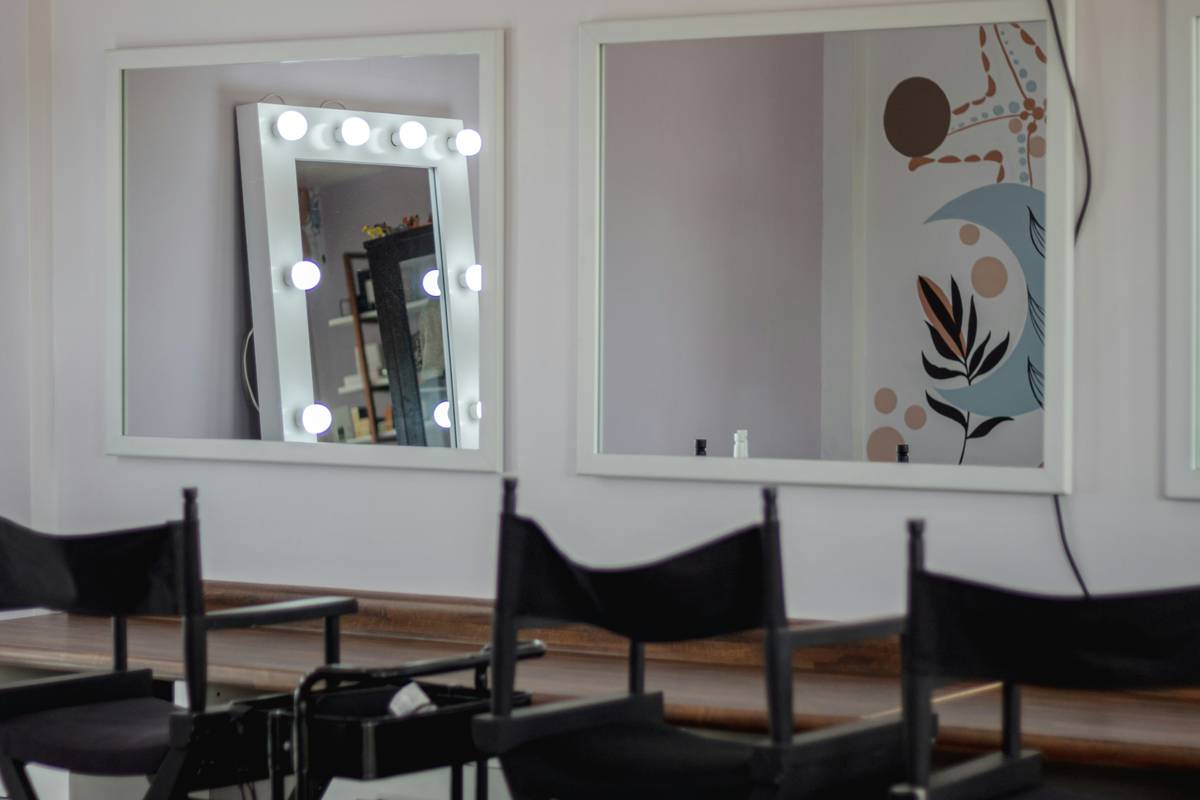
I learned this the hard way. In 2019, I rented a chair in a “luxury” salon charging $650/month. After taxes, product costs, and mandatory tip-outs, I netted about $28/hour. Then I moved into a shared studio with two other artists—private rooms, one front desk, split utilities. My overhead dropped to $400/month, and I raised prices 20%. Within six months, my take-home doubled. That’s the power of controlling your environment.
Step-by-Step Guide to Launching Your Own Suite
Step 1: Validate Your Location & Zoning
Not every commercial space allows cosmetology services. Check local zoning laws (call your city’s planning department). Ideal spots: medical plazas, retail strips with foot traffic, or co-working beauty studios like Sola or Phenix Salon Suites.
Step 2: Crunch Real Numbers (Not Dreams)
Here’s a realistic startup budget:
- Lease deposit + first month: $1,200
- Basin, chair, mirror, lighting: $2,500 (buy used on Facebook Marketplace!)
- Licensing + insurance: $400
- Branding (signage, business cards): $300
- Total: ~$4,400
Step 3: Get Legally Bulletproof
You need:
- Active cosmetology license (state-specific)
- Business license (usually $50–$150)
- General liability insurance ($300/year via Hiscox or Next)
- EIN from IRS (free, takes 10 minutes online)
Skip insurance? One slip-and-fall lawsuit could cost $50,000+. Not worth it.
Step 4: Price for Profit—Not Popularity
Calculate your minimum profitable rate:
(Monthly overhead ÷ billable hours) + desired hourly wage
Example: $800 overhead ÷ 80 hours = $10/base + $35 wage = $45/hour minimum. So a 2-hour color service should be at least $90—not $65 because “that’s what the salon next door charges.”
7 Profit-Boosting Tips Most Stylists Ignore
- Bundle, don’t discount. Offer a “Bridal Glow Package” (cut + color + blowout + trial) for $225 instead of individual services totaling $190. Clients feel pampered; you boost AOV.
- Sell retail—strategically. Keep only 3–5 hero products (e.g., Olaplex, Oribe Dry Texturizing Spray). Display near checkout with a sign: “Used in your service today!”
- Launch a membership. “The Blowout Club”: $89/month for 2 stylings. Recurring revenue = peace of mind during flu season.
- Automate reminders. Use Square Appointments or Fresha to reduce no-shows (which cost salons $150M/year, per StyleSeat).
- Track every dollar. Open a separate business bank account (Novo or Lili). Never mix personal and business spend.
- Pre-book 80% of your calendar. Require deposits for color services. Your time is inventory—protect it.
- Reinvest 20%. Allocate profits to education (new techniques), equipment upgrades, or marketing—not just your rent.
Grumpy Optimist Dialogue:
Optimist You: “Follow these tips!”
Grumpy You: “Ugh, fine—but only if coffee’s involved. And nobody touches my curling wand.”
⚠️ Terrible Tip Alert
“Just open your suite and clients will come!” Nope. I’ve seen 3 stylists fail in Year 1 because they assumed walk-ins would flood in. You need a pre-launch waitlist, Instagram teasers, and referral incentives before Day 1. Marketing isn’t optional—it’s oxygen.
Rant Time: My Pet Peeve
Stylists who undercharge then complain they “can’t save.” Honey, if your $45 balayage costs you $22 in product + labor + overhead, you’re volunteering—not running a business. Charge what you’re worth. Period.
Real Success Story: How Maria Turned $6K Into $92K/Year
Maria R., a color specialist in Austin, TX, launched her freelance hair stylist suite in 2022 after leaving a high-commission salon. She started with:
- $5,800 savings
- Used salon furniture from a closing spa
- Instagram-only marketing (before/after reels, client testimonials)
Within 4 months, she was fully booked. Her secret? The “Color Refresh Membership”: $120/month for root touch-ups + 10% off all services. Now, 65% of her income is recurring. In 2023, she netted $92,300 after expenses—and saved $18K for a second suite.

FAQs About Freelance Hair Stylist Suites
Do I need a separate business license for a suite?
Yes. Even if you’re solo, you’re operating a business entity. Most cities require a basic business license (~$100/year). Check with your local clerk’s office.
Can I run a suite from my home?
Rarely. Most residential zones prohibit commercial cosmetology due to water usage, chemical disposal, and client traffic. Some states allow it with special permits—but it’s risky. Commercial spaces are safer and more professional.
How much should I charge for rent if I sublet part of my suite?
Don’t. As a solo freelancer, sharing your suite dilutes your brand and creates liability. If you want to scale, open a second suite—or become a landlord later.
What’s the biggest mistake new suite owners make?
Underestimating operating costs. Remember: rent, utilities, product restocking, software subscriptions, insurance, taxes, and maintenance add up. Always budget 15% above your base estimate.
Conclusion
A freelance hair stylist suite isn’t just a workspace—it’s your fast track to financial independence in the beauty industry. By owning your environment, you reclaim control over your time, income, and creative vision. Start small, validate demand, get legally compliant, and price with confidence. Remember Maria? She didn’t wait for permission. Neither should you.
Your scissors are sharp. Your skills are proven. Now, build the business that finally pays you what you’re worth.
Like a 2004 Motorola Razr, your hustle deserves to flip open and shine.